Ultra-Processed Packaged Foods and Chronic Inflammation
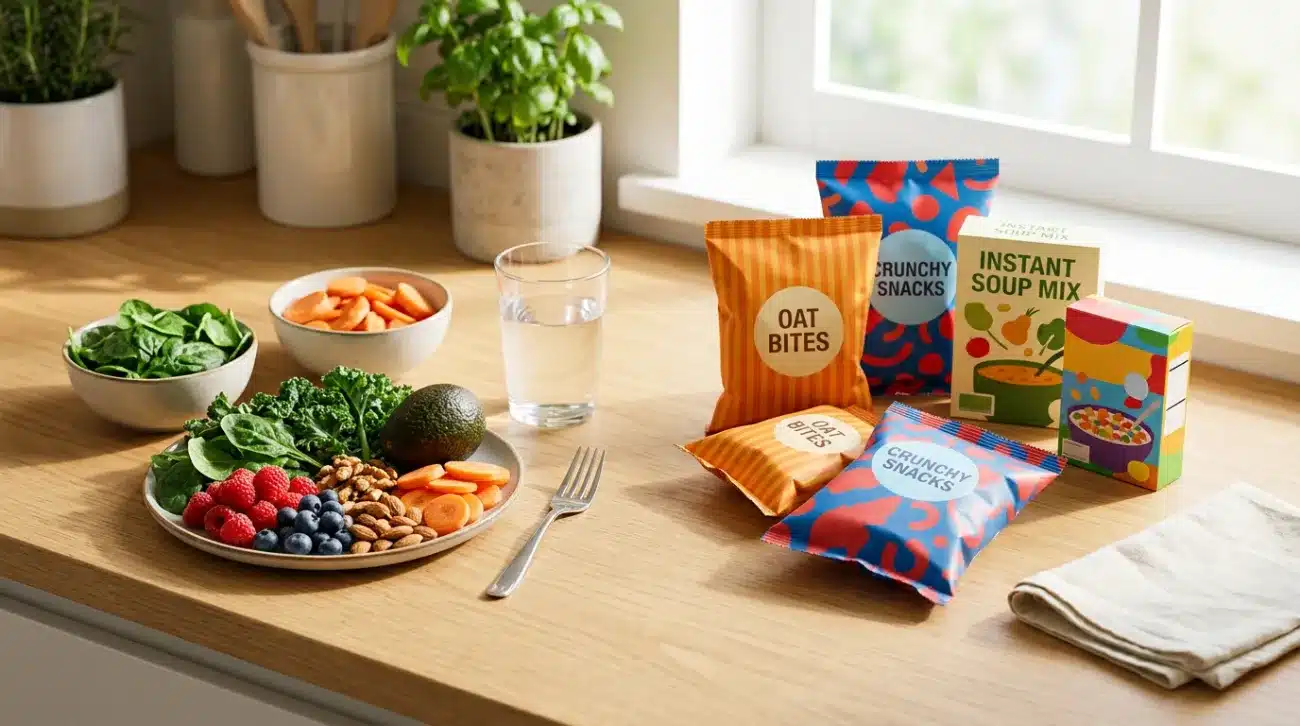
The fifth category is the broadest, and it overlaps with the previous four. Ultra-processed foods is a term used by nutrition researchers for industrially made products that typically contain ingredients rarely found in home kitchens, such as flavor enhancers, emulsifiers and other additives. Packaged snacks, instant noodles, frozen meals, sweetened breakfast products and many ready-to-eat items can fall into this group. Many of them also contain the added sugar, refined flour and processed fats described above, which is one reason the category is so often mentioned alongside inflammation.
Researchers are still debating which features of ultra-processed foods matter most. It may be the nutrient profile, the additives, the way the foods are eaten, or a combination of these, and the question is not settled. What most dietary guidance agrees on is that building meals around vegetables, fruit, legumes, whole grains, nuts and minimally processed proteins is a sensible default, and that heavily packaged convenience foods are best treated as occasional rather than central items.
The Five Foods Side by Side: A Contextual Breakdown

The grid below is an editorial categorization intended to summarize the reasoning described above. It is not measured data and does not rank the foods by how much inflammation they cause.
Sugary drinks and added sugars
Discussed mainly for fast blood sugar swings and weight gain. Often hidden in sauces and cereals.
Refined carbohydrates
Discussed for low fiber and quick digestion. Whole grains are the usual comparison point.
Processed meats
Cured and smoked products, often high in salt. Hard to separate from the rest of the meal in research.
Fried foods and trans fats
Discussed for the type of fat and frying frequency. Labels help identify trans fats.
Ultra-processed packaged foods
A broad group that overlaps with the others. The exact features that matter most are still debated.
Contextual breakdown prepared editorially. It summarizes the reasoning in this article and contains no measured values.
Eating Less Inflammatory Foods Without Overhauling Your Diet

Most nutrition guidance on inflammation focuses on overall eating patterns rather than on banning individual foods. A realistic approach starts with the easiest swaps, such as replacing a daily sweetened drink with water or unsweetened tea, choosing whole-grain versions of bread and pasta, or cooking at home more often so that the type and amount of oil are under your control. Reading ingredient lists, rather than relying on front-of-package claims, is another small habit that tends to reveal where added sugars and processed fats are hiding.
It also helps to remember that food is only one factor among several. Sleep, physical activity, body weight, smoking and stress are all discussed in relation to inflammation, and a person who changes one habit while ignoring the others may see limited benefit. Anyone with a diagnosed inflammatory or autoimmune condition, diabetes, or other medical concerns should talk to a physician or registered dietitian before making significant dietary changes, since individual needs differ and general advice cannot replace personal medical guidance.
Key Takeaway
The research behind these five categories is largely observational, so the findings describe patterns across groups of people rather than guaranteed effects in any individual. The most dependable takeaway is about overall balance: more whole and minimally processed foods, and fewer sugary, refined, heavily processed and fried ones.
Reading Between the Lines of Inflammatory Eating

The five categories discussed here, sugary drinks and added sugars, refined carbohydrates, processed meats, fried foods with industrial trans fats, and ultra-processed packaged products, are best understood as common patterns flagged in nutrition discussions rather than as proven single causes of inflammation. Their reputation as secret culprits comes largely from how easily they hide in everyday meals, not from any certainty that one serving will cause harm. The practical lesson is to look at the overall shape of your diet, read labels with care, make gradual swaps toward whole and minimally processed foods, and seek personalized advice from a qualified health professional if you have specific health concerns.