Why Cold Showers Change Your Brain Chemistry
A look at what one well-known experiment measured, what it did not, and why the popular claims need context.
Neuroscience Explainer
The idea that cold showers change your brain chemistry has become a staple of wellness conversations, usually backed by two dramatic percentages that circulate widely online. Those figures trace back to a small laboratory study from 2000, and understanding what that study actually tested is the key to separating a real physiological effect from an overstated promise. Researchers did find that cold water immersion was associated with sharp rises in the signaling chemicals noradrenaline and dopamine in the blood, but the conditions of the experiment were far more extreme than a typical morning shower, and the measurements came from blood plasma rather than from the brain itself. This article walks through the evidence that exists, the caveats that accompany it, and what remains unproven.
The Landmark Study Behind the Cold Water Dopamine Claim
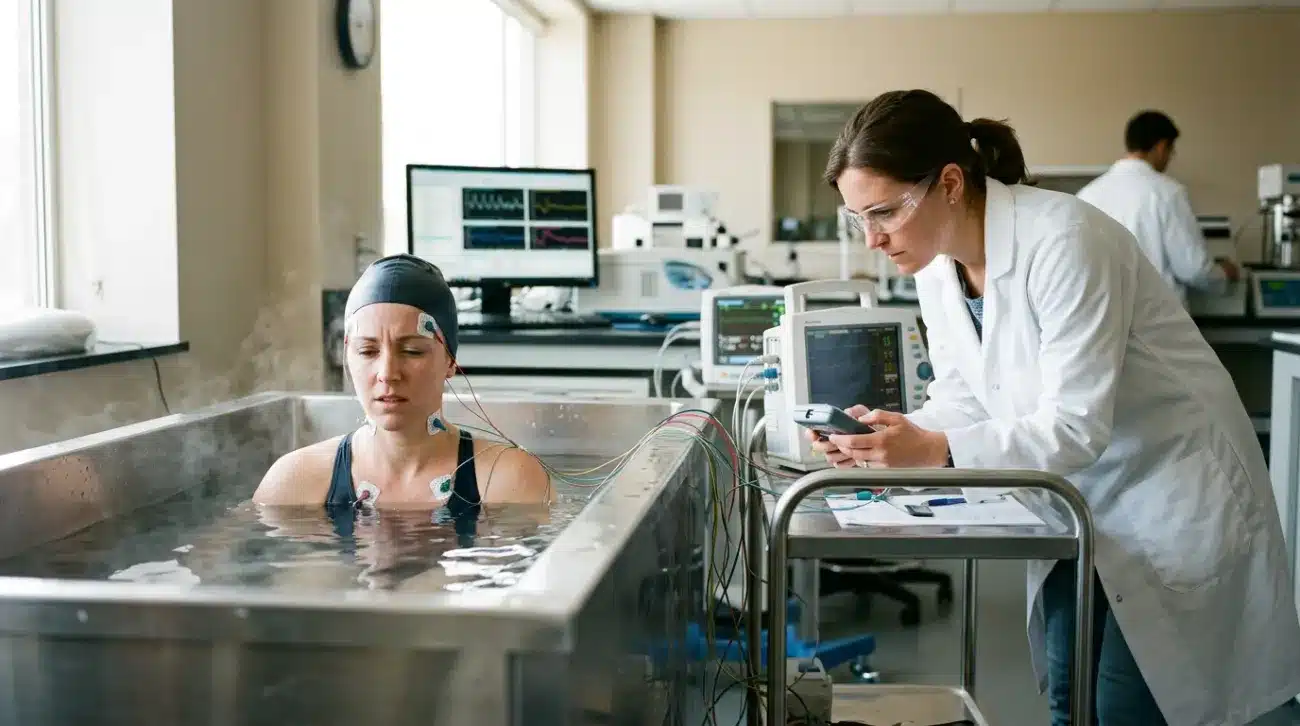
Most discussions of cold exposure and neurochemistry lead back to a paper by Petr Šrámek and colleagues titled “Human physiological responses to immersion into water of different temperatures,” published in the European Journal of Applied Physiology in 2000 (volume 81, issue 5, pages 436–442). According to descriptions of the study, young men were immersed up to their necks in water for one hour at three temperatures: 32°C (90°F), 20°C (68°F) and 14°C (57°F). The design allowed the researchers to compare how the body responded as the water became colder.
The abstract reports that immersion at 14°C lowered rectal temperature and increased metabolic rate by 350 percent. Heart rate and systolic and diastolic blood pressure rose by 5, 7 and 8 percent respectively. Plasma noradrenaline and dopamine concentrations increased by 530 percent and 250 percent, while urine output rose by 163 percent, more than it did at 32°C. A summary of the paper published by the Psychiatry & Psychotherapy Podcast adds that blood samples were taken at 0, 30, 60 and 120 minutes, and that rectal temperature fell from 37.3°C to 35.6°C in the coldest condition.
Noradrenaline and Dopamine: What the Measured Changes Looked Like

Noradrenaline, also called norepinephrine, and dopamine belong to a family of chemicals known as catecholamines. A paper citing the Šrámek study notes that moderate and high-intensity exercise is known to activate the sympathetic nervous system with a release of catecholamines, and that cold water exposure is likewise associated with higher plasma noradrenaline and dopamine. The chart below shows the percentage changes reported in the 14°C condition of the 2000 study.
The chart makes one feature of the results easy to see: the changes in the signaling chemicals and metabolic rate were far larger than the changes in heart rate and blood pressure. Descriptions of the same paper also note that the effect depended on temperature. One summary reports that immersion at 20°C raised resting metabolism by 93 percent but did not appear to trigger a comparable noradrenaline release, which suggests the neurochemical response was tied to how cold the water was.
Blood Chemistry Versus Brain Chemistry: An Important Distinction

The study’s dopamine figure came from plasma, meaning blood. The Psychiatry & Psychotherapy Podcast summary stresses that these were peripheral measurements, not measurements inside the brain, and cautions that a large rise in plasma dopamine does not necessarily translate into increased dopamine activity in the central nervous system. That point matters because claims that cold showers raise dopamine in the brain are often presented as direct findings when, in this study, they are not.
The same summary notes that epinephrine remained unchanged during immersion in the coldest water and that cortisol decreased in each session, including control sessions. The podcast suggests this could reflect psychologically driven cortisol that fell as participants grew accustomed to the procedure. In other words, the stress hormone picture was not a simple surge, and it illustrates why a single headline number rarely captures what a study found.